



Dutch Elm Disease Assessment in Calgary protects one of North America's last disease-free elm populations. in Calgary and the surrounding area remains free of Dutch elm disease, and keeping it that way depends on how elms are pruned, how branches are cut, and how wood is disposed of. Chinook Tree Trimming's ISA Certified Arborists assess your elm, explain the legal requirements that actually apply in Calgary, and recommend the safest course of action. We have been protecting local trees since 2014. Early detection and proper handling make all the difference.
Why Dutch Elm Disease Assessment Matters in Calgary
Dutch elm disease spreads through infected wood and the elm bark beetle. Once established in a region, it is nearly impossible to eradicate. Calgary's elm population, particularly the mature street trees in post-war subdivisions and the elms on ravine lots across the surrounding municipalities, represents decades of growth. A single infected tree can trigger quarantine rules and restrictions on wood movement across the province. Assessment now prevents costly removal and replanting later.
- We identify disease symptoms before they become visible to the untrained eye.
- We document the elm's health status for your records and for municipal permit applications.
- We explain which pruning methods comply with in Calgary and the surrounding area's elm sanitation rules.
- We advise on proper disposal of elm wood to prevent beetle spread.
- We recommend timing for any necessary pruning within the legal window.
Early assessment protects your property, your neighbourhood, and the entire region's elm heritage. Many homeowners in Calgary do not realize that cutting an elm at the wrong time of year or handling the wood incorrectly can carry legal consequences and spread disease to neighbouring properties.
Regional context: in Calgary and the surrounding area remains disease-free, but preventive measures are mandatory. The City of Calgary may require an arborist assessment before approving elm pruning or removal on private property. Our ISA Certified Arborists prepare the documentation you need.
How We Assess Your Elm
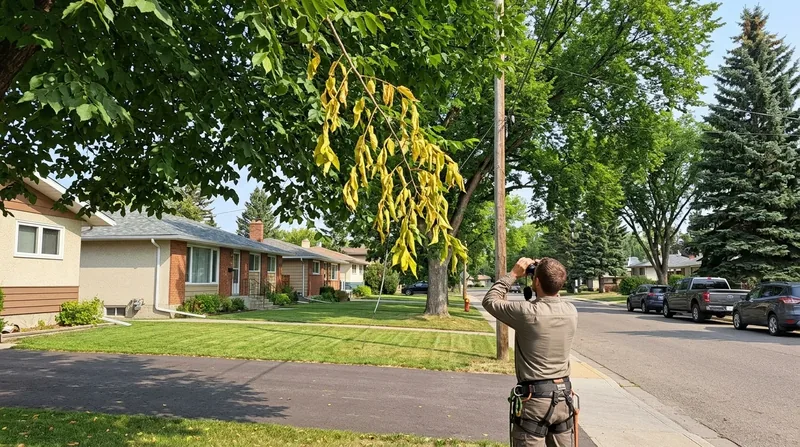
Assessment begins with a visual inspection of the tree's crown, trunk, and branch structure. We look for the telltale signs of Dutch elm disease: wilting, yellowing, and branch dieback. We also evaluate the tree's overall vigour, identify any previous damage or pruning wounds, and assess the risk of branch failure. Every assessment is documented in writing so you have a record for your municipality and your insurance company.
- We inspect the crown for symptoms of disease or stress.
- We examine the trunk and main branches for cankers, wounds, or beetle entry holes.
- We assess branch structure and identify any hazardous limbs.
- We photograph the tree and note its location, species, and estimated age.
- We provide a written report with findings and recommendations.
- We advise on the best time to prune or remove the tree, if needed.
The assessment typically takes 30 to 60 minutes depending on the tree's size and access. We then send you a detailed report within two business days. If your elm is healthy, the report gives you peace of mind and a baseline for future monitoring. If we detect risk, we outline the next steps and timeline. Visit our Arborist Report & Risk Assessment page for details on how we document tree health for municipal applications.
Example: A homeowner in Bowness with a 40-year-old elm noticed yellowing in the lower crown. Our assessment revealed early branch dieback consistent with stress, not disease. We recommended pruning to improve air circulation and monitoring over the next two seasons. The written report supported the homeowner's permit application with the City of Calgary.
Assessment Methods and Documentation
| Assessment Type | What We Do | When to Use It |
|---|---|---|
| Visual Health Assessment | Crown inspection, symptom check, branch evaluation, written report. | Routine monitoring, pre-pruning evaluation, permit support. |
| Risk Assessment | Structural analysis, hazard identification, failure probability, mitigation options. | Trees near houses, power lines, or property lines; mature elms with visible damage. |
| Disease Diagnosis | Symptom documentation, differential diagnosis, management recommendations. | Suspected disease, unusual wilting or dieback, quarantine concerns. |
| Municipal Documentation | Professional report with photos, findings, and recommendations for City of Calgary permit. | Required for removal or major pruning permits; supports insurance claims. |
Each assessment is tailored to your elm's specific situation. If your tree is healthy, assessment confirms it and gives you a baseline for the future. If we detect disease risk or structural hazard, we provide clear guidance on timing and method. Learn more about our Tree Disease Diagnosis service for other species.
Legal Requirements and Wood Disposal in Calgary
in Calgary and the surrounding area's elm sanitation rules require that any elm wood be handled carefully to prevent the spread of elm bark beetles. Firewood, chips, and logs must be disposed of properly, chipped on site, or removed by a licensed contractor. The City of Calgary may require a permit before pruning or removing an elm on private property. We prepare the documentation your municipality needs and advise you on legal disposal options.
- Elm wood cannot be left in piles or stored on your property during beetle season.
- Firewood from elm must be chipped, burned, or buried within a specified timeframe.
- We coordinate wood removal and chipping to comply with local rules.
- We provide written confirmation of proper disposal for your records.
- Pruning must occur only during the dormant season (late fall to late winter) unless the tree is dead or poses immediate hazard.
Proper handling is not just a legal requirement; it is essential to protecting your neighbours' elms and the entire region's disease-free status. We manage all wood disposal as part of our service, so you never have to worry about compliance. If you need to remove an elm, our Tree Removal service includes full site cleanup and proper wood handling.
Timing Your Assessment and Next Steps
The best time to assess an elm is during dormancy, when disease symptoms are often clearest and pruning decisions can be made for the coming season. However, if you notice sudden wilting, branch dieback, or unusual insect activity, contact us immediately. We offer emergency assessment and can often visit within 24 hours in Calgary and the surrounding area.
- Schedule assessment in late fall or winter for routine monitoring and planning.
- Request urgent assessment if you see wilting, yellowing, or beetle holes.
- Bring any previous arborist reports or tree care records to your appointment.
- We will photograph the tree and send you a detailed report within two business days.
- Use the report to apply for municipal permits or support insurance claims.
Getting your elm assessed now prevents costly surprises later. A healthy elm is an asset to your property and your neighbourhood. A diseased or structurally hazardous elm can become a liability. Our ISA Certified Arborists have been assessing trees in Calgary since 2014 and understand the specific challenges of our climate, soil, and municipal regulations. Call us at (587) 333-6436 for a free estimate, or visit our contact page to request an assessment today.
Prices Dutch Elm Disease Assessment in Calgary — Indicative pricing
| Service | Price | Details |
|---|---|---|
| Dutch Elm Disease Assessment | From $275 | Visual health inspection, written report, disease symptom evaluation |
| Risk Assessment with Documentation | From $350 | Structural analysis, hazard identification, municipal permit support |
| Disease Diagnosis and Management Plan | From $400 | Detailed diagnosis, differential analysis, treatment or removal recommendations |
| Multiple Trees or Large Property | From $600 | Assessment of 3 or more elms with comprehensive report |
| Emergency Assessment (24-hour response) | From $450 | Urgent evaluation for suspected disease or hazard |
| Free Estimate | Complimentary | Call (587) 333-6436 or request online; response within 24 hours |
Indicative prices; free, personalized estimate within 24h at (587) 333-6436.